
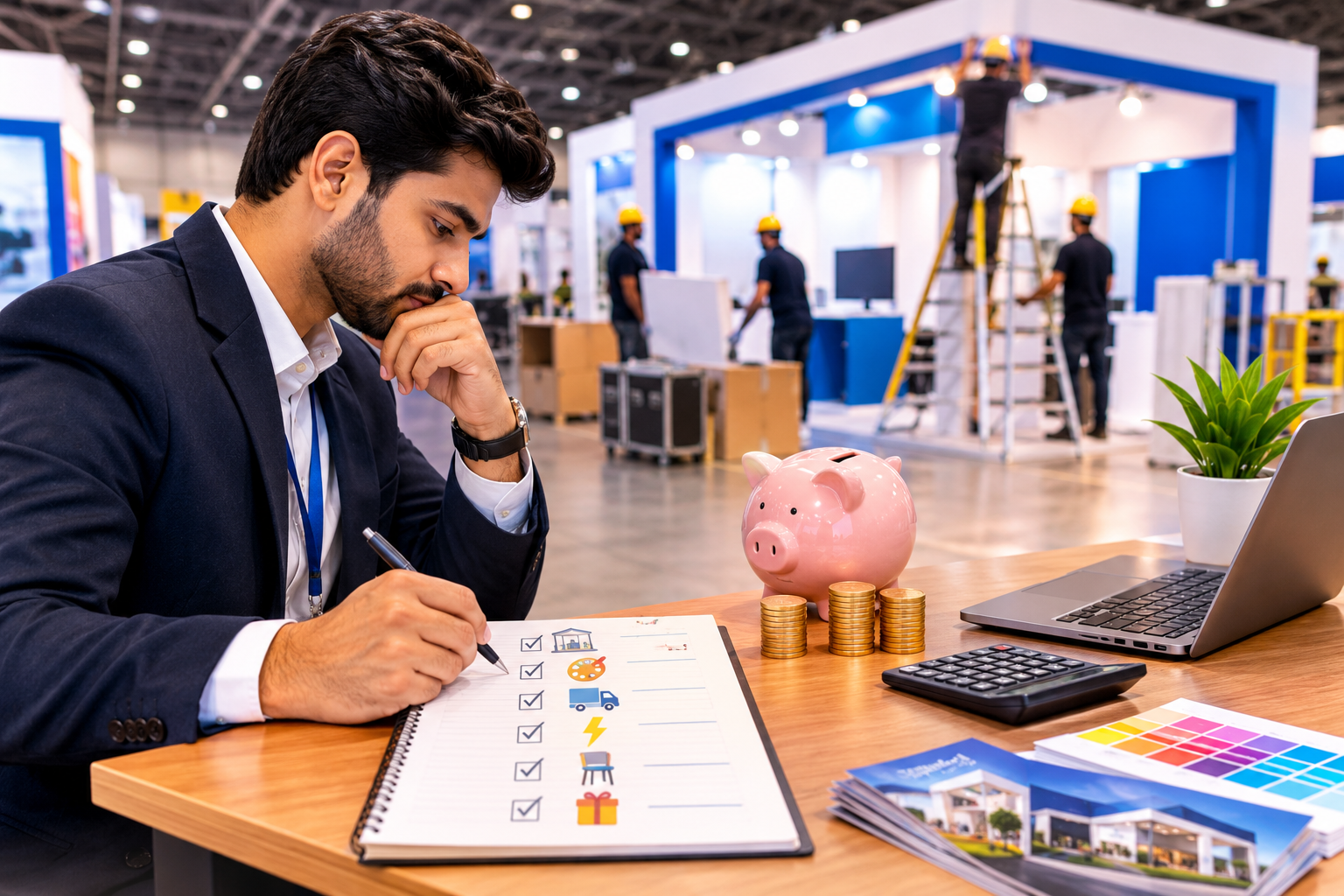
Your first exhibition can feel exciting and a little scary at the same time. You have a small space, a fixed budget and thousands of visitors walking past. Everyone around you is trying to grab attention too. So how do you make sure people stop at your stand and not someone else’s?
The answer is good planning. A booth that looks great on the show floor is rarely an accident. It comes from clear goals, smart choices and a bit of early preparation. In this guide, we will walk through the main steps in plain language, so you can plan your first stand with confidence.
Start with a clear goal
Before you think about colours, lights or banners, ask yourself one simple question. Why are you exhibiting?
Some businesses want to collect leads. Others want to launch a new product, meet old clients or simply let people know they exist. Your goal decides everything else, from the size of your stand to the staff you bring.
Write your goal down in one line. For example, “Collect 100 good leads in three days” or “Introduce our new product to local buyers.” When you feel lost later, this line will bring you back on track.
Set a realistic budget early
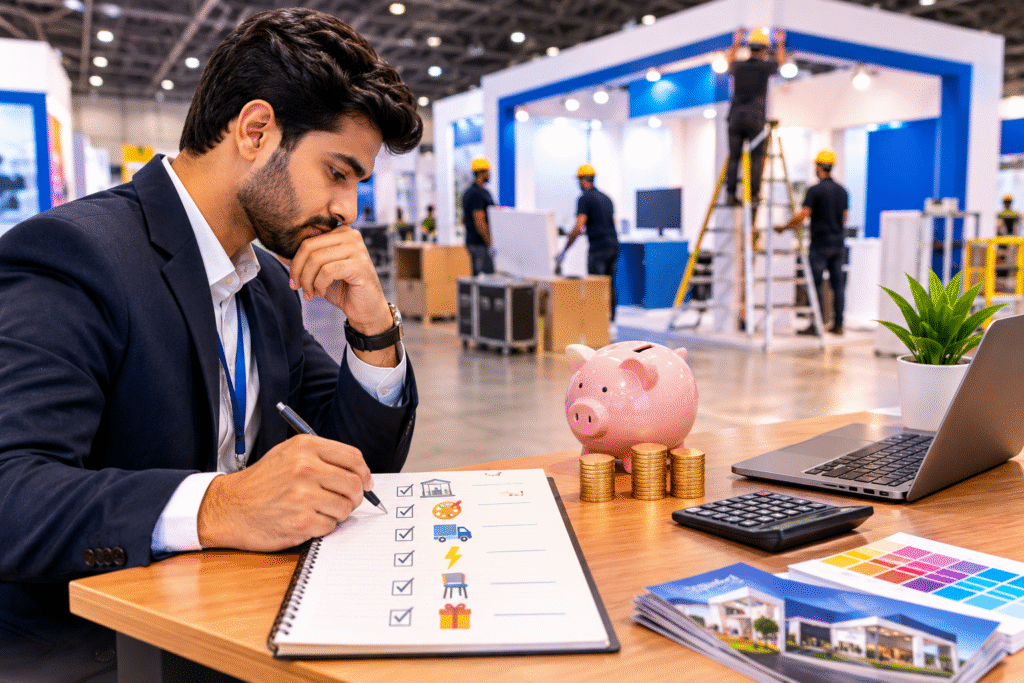
Many first-time exhibitors only count the cost of the booth itself. In reality, the budget is wider than that. You also need to think about:
- Space booking fees
- Booth design and construction
- Printing and graphics
- Transport and storage
- Electricity, internet and furniture rental
- Staff travel and food
- Giveaways and brochures
A good rule is to keep around 10 to 15 percent of your budget aside for last-minute changes. Something small always comes up. A broken light, an extra table or a late print job can add cost quickly.
Choose the right space
Not every spot on the show floor works the same. Corner stands get more attention because people can see them from two sides. Spots near the entrance, food area or main stage usually see more footfall. Spots at the far end may be cheaper, but fewer people may walk that far.
If your budget is tight, you do not always need the biggest space. A smaller stand with a smart layout can look better than a large, empty one. Ask the organiser for the floor plan and think about how visitors will move around the hall.
Work with a trusted partner
This is where many first-time exhibitors save themselves a lot of stress. Building a stand on your own sounds cheaper, but it often leads to delays, poor finishing and rule problems with the venue.
A good event booth design company Oman can look after the full process for you. That means planning, design, fabrication, setup and dismantling. They also know the local venue rules, which matters a lot. Each exhibition hall has its own limits on height, electrical load and materials, and missing them can cause trouble on the setup day.
When you search for an event booth design company Oman, do not choose only on price. Look at their past work, ask for client references and check how well they listen. If you want to understand what is possible, you can read more about booth fabrication services and see how a complete process works from start to finish.
Why choose Axis Oman for your first booth
If you are looking for a dependable event booth design company Oman, Axis Oman is a name worth considering. The team handles everything under one roof, from the first idea and 3D design to fabrication, setup and dismantling. This means you do not have to run between different vendors or worry about missed deadlines.
Axis Oman also understands local exhibition halls, venue rules and visitor behaviour, which is a big help for first-time exhibitors. You can share your goal and budget, and the team will suggest a stand that fits both. Clear communication and honest advice make the whole process easier, especially when you are new to trade shows.
Keep the design simple and clear
A common mistake is trying to show everything at once. Too many products, too much text and too many colours confuse visitors. People walking past give you about five seconds. In that time, they should understand who you are and what you do.
Here are a few easy design tips:
- Use one strong headline that explains your business
- Keep your logo large and easy to see
- Pick two or three brand colours and stick to them
- Use good lighting to highlight your products
- Leave open space so visitors feel comfortable stepping in
Think about height too. Taller elements, such as a hanging sign or a tall back wall, help people spot your booth from far away. Flat, low stands can get lost in a busy hall.
Plan the layout for easy movement
Your layout should invite people in, not block them. Avoid putting a big table at the front, because it works like a wall between you and the visitor. Place it at the side or the back instead.
Think about different zones inside your space. You may need a display area, a small meeting corner and a storage spot. Even in a small booth, a simple plan makes the space feel organised.
A reliable event booth design company Oman will usually give you a 3D drawing before building anything. This helps you see the layout, check the flow and make changes early, which costs far less than fixing things on site.
Make your booth interactive
People remember what they do, not just what they see. A small touch of interaction can bring more visitors to your stand and keep them there longer.
You could use a simple product demo, a touchscreen, a short video or a quick game with a small prize. Even something basic, like a sample table or a live tasting, can work well. Just make sure it fits your business and does not cause a queue that blocks the walkway.
Train your booth staff
Your staff are as important as the stand itself. A beautiful booth with bored, silent people will not bring results.
Before the show, brief your team on your goal, your main message and your offers. Tell them to stand, smile and greet visitors rather than sit behind a phone. Keep the conversation friendly and short at first, then go deeper if the visitor shows interest.
Also, plan shifts. Long exhibition days are tiring, and a tired team loses energy fast. Short breaks help everyone stay fresh.
Do not forget follow-up
Many first-time exhibitors work hard during the show and then forget the most important part. The real result comes after the event.
Collect contact details in a simple way, such as a form, a QR code or a card box. Write a quick note on each lead, like “wants a quote” or “call next week.” Within two to three days after the show, send a thank-you message or call them. The faster you reach out, the better your chances are.
Check everything before show day
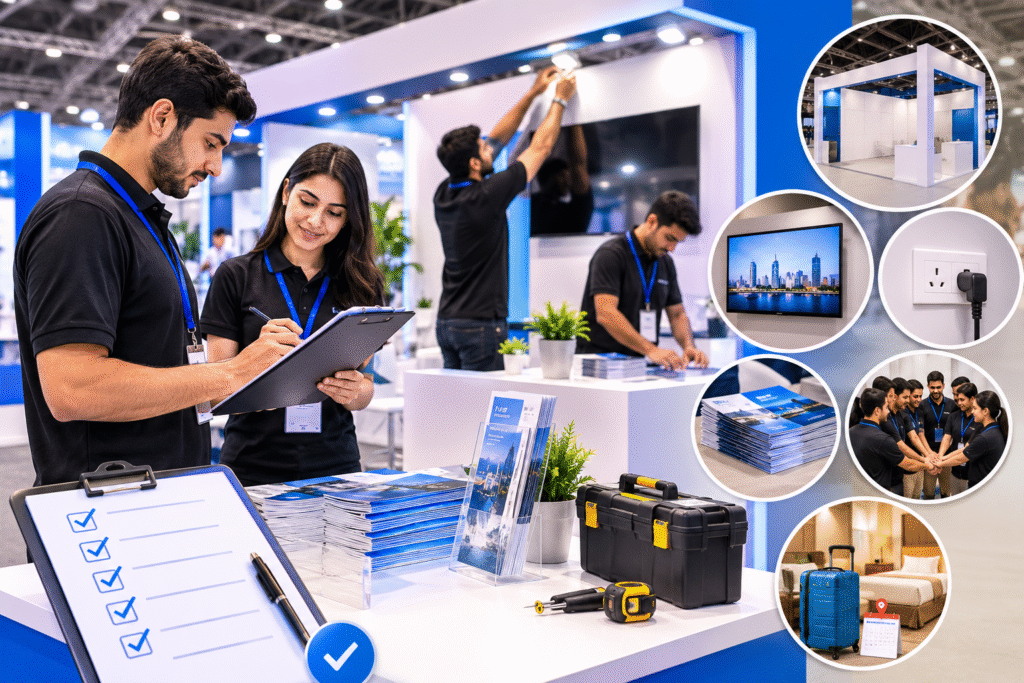
A week before the event, go through a simple checklist:
- Is the booth built and approved by the organiser?
- Are the graphics printed and checked for spelling mistakes?
- Are the lights, screens and sockets working?
- Do you have enough brochures, cards and samples?
- Does every team member know their role?
- Are travel and hotel plans confirmed?
If you are working with an event booth design company Oman, ask them to share a setup timeline so nothing is missed. Arrive early on the first day, test everything once more and keep a small toolkit nearby for quick fixes.
Common mistakes to avoid
Learning from others’ mistakes saves time and money. Here are a few that show up again and again:
- Starting the planning too late
- Ignoring the venue rules
- Overloading the stand with products
- Hiring staff who do not know the business
- Having no plan for follow-up
- Choosing only the cheapest option without checking quality
If you avoid these, you are already ahead of many other first-time exhibitors.
Make your first exhibition count
Planning your first stand does not need to be complicated. Start with a clear goal, set a sensible budget, keep your design simple and train your team well. Then follow up quickly after the show, because that is where real business comes from.
If you want the process to feel lighter, work with an experienced event booth design company Oman that understands local venues, timelines and visitor behaviour. With the right partner and a good plan, your first exhibition can be the start of many more successful ones. To explore options for your next show, visit the booth fabrication page and speak with the team about your ideas.