
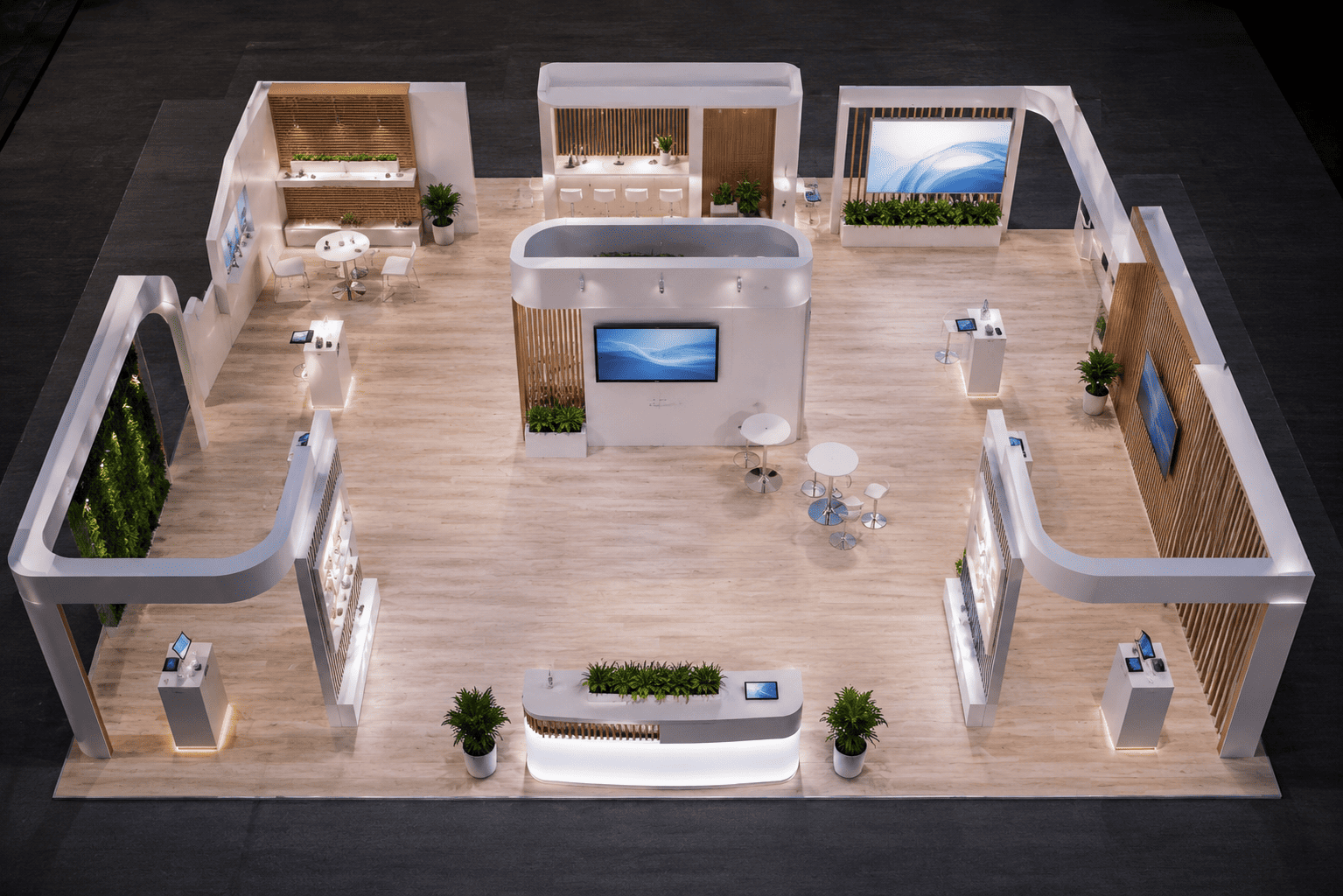
Think about the last time you walked through an exhibition hall. Dozens of stands, all competing for your attention at the same time. Some you walked straight past without a second glance. Others made you stop, look, and step inside.
What made the difference?
It was not always the biggest stand or the most expensive one. It was the one that communicated something clearly and quickly. The one that felt inviting. The one that made you feel like stepping in was worth your time.
That is the challenge every brand faces at an exhibition. You have roughly three seconds as someone walks past your stand. Three seconds to catch their eye, spark their curiosity, and give them a reason to stop walking.
If your stand does not do that, everything else, your products, your team, your pitch, never gets a chance.
This blog breaks down exactly what makes an exhibition stand work, and how working with the right exhibition organizer in Oman can make the difference between a stand that gets noticed and one that gets ignored.
Why Three Seconds Is All You Get
Exhibition halls are busy, loud, and visually overwhelming. Attendees are walking quickly, scanning their surroundings, and making split-second decisions about where to spend their time.
Research consistently shows that people form a first impression of a physical space in just a few seconds. In an exhibition environment, that window is even shorter because there is so much competing for attention all at once.
In those three seconds, a visitor decides whether your stand is relevant to them, whether it looks professional and trustworthy, and whether approaching it is worth their time.
If your stand is cluttered, unclear, or visually dull, that decision happens fast and it goes against you. The visitor moves on and you never get another chance with them that day.
This is why stand design is not just about looking good. It is about communicating clearly and quickly enough to interrupt someone who is already moving on.
The First Thing That Catches the Eye: Your Visual Identity
Before anyone reads a single word on your stand, they see colour, shape, and light.
Your colour choices should be deliberate. Use your brand colours consistently but think about contrast too. A stand that blends into the surrounding hall will be overlooked. Bold, confident use of colour draws the eye from a distance.
Lighting is one of the most underused tools in exhibition stand design. A well-lit stand looks more premium, more inviting, and stands out in a hall where many stands rely only on overhead venue lighting. Spotlights on products, backlit graphics, and LED strips along the structure all make a real difference.
A reliable exhibition organizer in Oman will guide you on which lighting setups work best for different hall configurations and how to maximize visual impact within your budget.
Your Message Needs to Be Instantly Clear
Once your stand catches someone’s eye, they need to understand immediately what you do and why it matters to them.
This is where many exhibitors go wrong. They fill their stand with too much text, too many product names, too many taglines. A visitor walking past at pace cannot process all of that. They will not slow down to read a paragraph.
Your key message should be short, bold, and positioned high enough to be seen from a distance. Think of it as the one sentence that explains your value to the right person in the shortest possible way.
Supporting details can go lower on the stand where interested visitors can read once they have already been drawn in. But the headline has to do the heavy lifting first.
A good exhibition stand builder in Oman will help you think through the information hierarchy so the most important message lands first, every time.
The Layout of Your Stand Matters More Than You Think
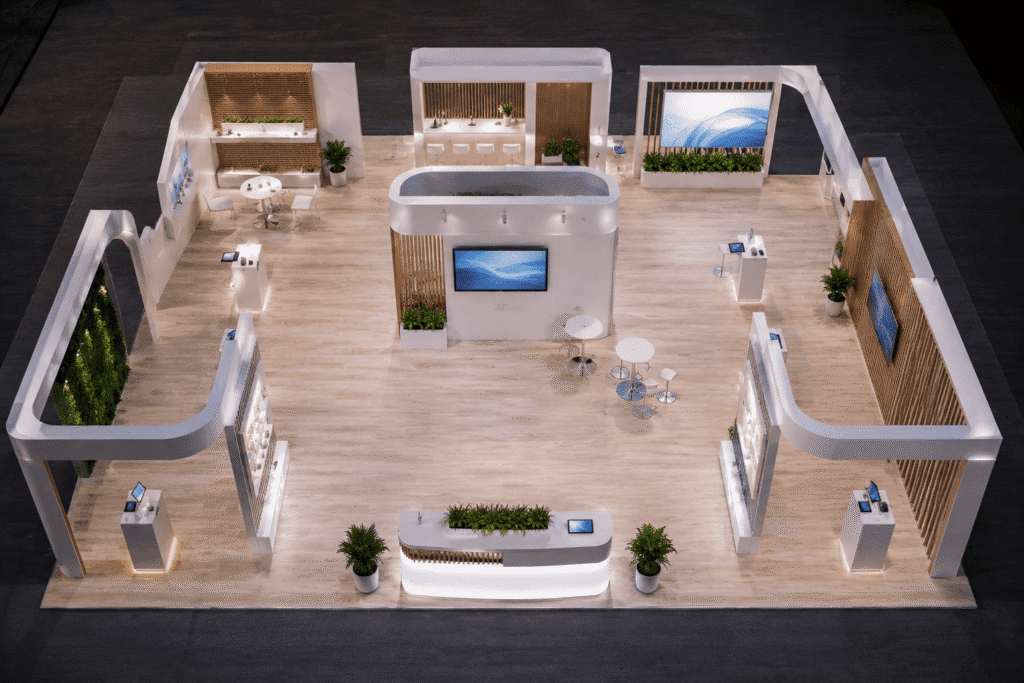
How a stand is physically arranged affects whether people feel comfortable entering it.
Stands that are completely open on at least two sides invite visitors in. Stands that feel closed off or blocked by furniture create a psychological barrier. People are less likely to step into a space that feels like it requires commitment just to enter.
Think about where your team will stand. Staff huddled behind a table at the back of the stand creates distance. Staff positioned near the edges of the stand, ready to welcome people as they pass, creates connection.
Display your most visually interesting products or materials at the front of the stand where they can be seen from the aisle. Give people a reason to step forward before anyone says a word to them.
An experienced exhibition organizer in Oman understands the psychology of exhibition spaces and can help you design a layout that works naturally rather than one that accidentally pushes visitors away.
Your Team Is Part of the Stand Design
This one often gets overlooked in conversations about stand design. But your team is one of the most visible elements of your stand.
Matching uniforms or branded clothing immediately signals professionalism. It tells a visitor that this is a serious, organised company. It also makes your staff easy to identify among the crowd.
More importantly, your team’s body language and energy matters enormously. A team that looks bored, distracted by their phones, or engaged in conversation with each other creates the impression that visitors are an interruption rather than the point.
Brief your team before the event. Give them clear talking points. Remind them that every person who slows down near the stand is a potential conversation worth having.
The best stand design in the world is still let down by a team that is not engaged. The combination of a great stand and a great team is what actually drives results.
Use Technology Where It Adds Real Value
Interactive screens, product demos, digital catalogs, and touch displays can all enhance a stand experience when they are used purposefully.
The key word is purposefully. Technology should serve the visitor experience, not just be there to look impressive. An interactive product configurator that helps a visitor visualise a solution for their specific need is genuinely useful. A looping video that nobody is watching is not.
If you are planning to incorporate technology into your stand, discuss it with your exhibition stand builder in Oman early in the design process. It affects power requirements, stand layout, and how your team will use the space during the event.
Plan for After the Impression Is Made
Catching someone’s attention is only the beginning. Once they stop at your stand, you need a clear process for what happens next.
How do you capture their contact details? How do you qualify whether they are the right type of prospect? What materials do they take away? What is the follow-up plan after the event?
A well-designed stand creates the right first impression. But the follow-up process you have in place is what turns that impression into actual business results.
Working with a professional exhibition organizer in Oman means you get support not just on stand design but on thinking through the broader event strategy so the experience works from start to finish.
Axis Events: Exhibition Stand Builders Who Understand What Works
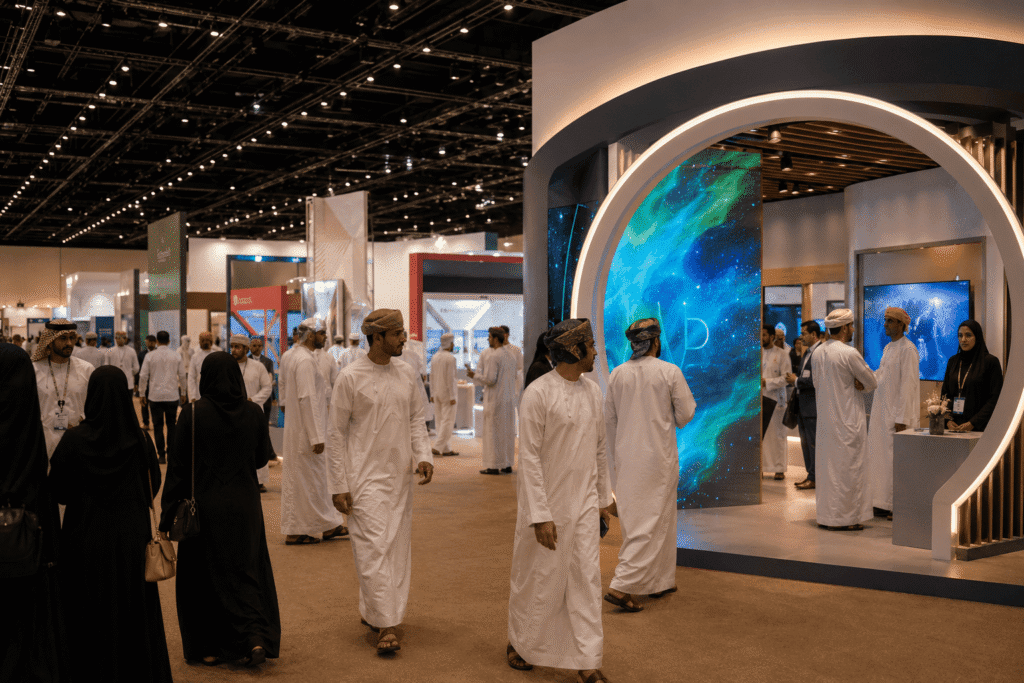
Axis Events has worked with brands across industries to design and build exhibition stands that genuinely perform. Their team understands the Oman exhibition landscape, the venues, the audiences, and what it takes to stand out in a competitive hall.
From initial concept through to installation and on-site support, Axis Events handles every part of the process so your team can focus on the conversations that matter.
Whether you are exhibiting for the first time or looking to improve on a previous experience, working with a trusted exhibition organizer in Oman like Axis Events makes the entire process smoother and the results significantly better.
Axis Events brings local knowledge, creative expertise, and hands-on experience to every project they take on. If you want a stand that actually works on the day, they are the team to talk to.
Visit Axis Events to explore their work and get in touch with Axis Events to start planning your next exhibition stand.